AT 20, HE'S ALREADY PERFORMED WAYANG ON 4 CONTINENTS
Ki Herjuno Pramariza Fadhlansya grew up watching dalang masters backstage. His mission is to make wayang relevant for the TikTok generation.
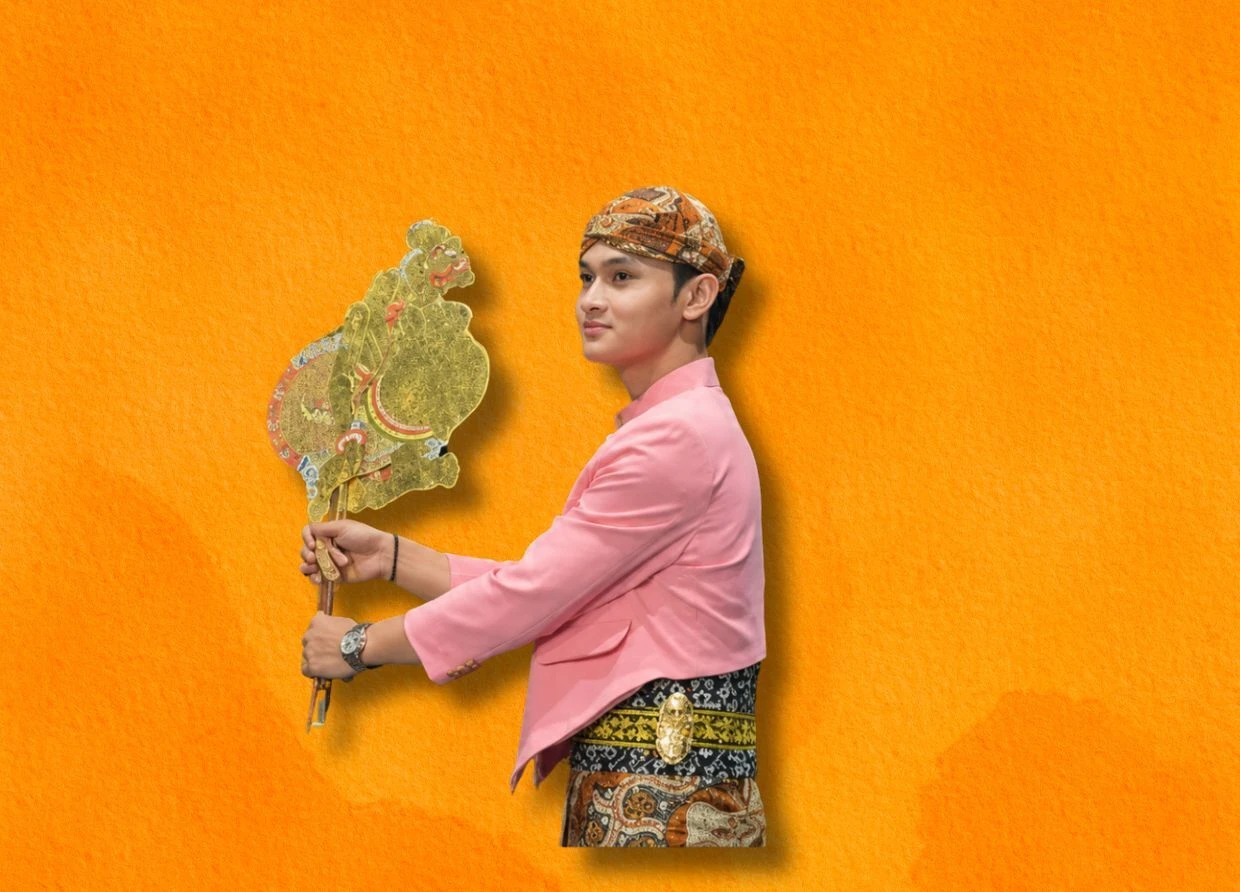



Most 20-year-olds are still figuring out what they want to do with their lives. Ki Herjuno Pramariza Fadhlansya, born in Depok on June 19, 2005, already has five international performances behind him, a degree in architecture at Universitas Indraprasta PGRI (UNINDRA) in progress, and a name given to him by one of Indonesia's greatest dalang masters.
His story isn't a social media trend. It's 18 years of muscle memory, of holding wayang puppets every single day until his hands know exactly how to make them breathe.
Who Is Ki Herjuno Pramariza Fadhlansya ?
Ki Herjuno is a young dalang — a traditional Javanese shadow puppet master — based in Depok, West Java. He studies architecture at UNINDRA while actively performing wayang kulit, the 1,000-year-old UNESCO-recognized art of leather puppet theater. He is 20 years old and has performed internationally in India (twice), Russia, Malaysia, and South Korea. What makes him unusual is the origin of his name. "Herjuno" was given directly by the late Ki Anom Suroto — one of Indonesia's most celebrated dalang masters, known for his powerful storytelling and his ability to bring characters to life from behind the screen. The name carries meaning: "Her" means clear water, "Jun" means vessel, "No" means light. Together: a vessel of clear water that gives light. A hope, not just a name.
How Did He Start Performing Wayang So Young?
Herjuno's journey began at age two — not on stage, but in the audience, watching maestros like Ki Anom Suroto and Ki Bayu Aji perform. While other kids watched cartoons, he watched shadows dance on a white cloth screen lit from behind, and something clicked that never unclicked.
By the time most kids were doing homework, he was practicing puppet manipulation daily. The repetition built intuition. His hands learned to read the puppet's weight, its balance, how far to tilt a head to suggest doubt, how fast to shake an arm to signal rage. Wayang kulit has no script for the body — it's entirely felt.
Why Does This Matter for Indonesian Culture Today?
Indonesia is losing its traditional arts practitioners at a faster rate than it's gaining them. Wayang kulit performances, once held in village courtyards overnight, now compete with 15-second Reels. Ki Herjuno's answer isn't to resist the algorithm — it's to make wayang so compelling that the algorithm can't ignore it.
At an age when most cultural practitioners are still learning, Ki Juno is already collaborating, traveling, and advocating. His performances in Seoul and Moscow weren't just cultural showcases — they were proof that a story told through leather and light, in a language nobody in the room speaks, can still make an audience feel something.
What Is Wayang Kulit and Why Is It UNESCO-Recognized?
Wayang kulit is a traditional Indonesian shadow puppet theater, typically performed overnight by a single dalang who voices all characters, narrates the story, and controls every puppet. UNESCO recognized it as an Intangible Cultural Heritage of Humanity in 2003. The puppets are made from hand-carved and painted buffalo leather, and stories are traditionally drawn from Hindu epics like the Mahabharata and Ramayana. The dalang must master puppetry, vocal performance, musical cues, and improvisation simultaneously — making it one of the most demanding solo performance forms in the world.
Ki Herjuno carries all of that. At 20. While studying architecture.
The Counterintuitive Truth About Cultural Preservation
Here's what Ki Juno's story quietly proves: culture doesn't survive through museums. It survives through obsession. Not grants, not government programs, not viral campaigns — just one person who decided, at age two, that wayang was worth their whole life. That's the only preservation strategy that actually works.
Frequently Asked Questions













RELATED POSTS