BOTTLESMOKER'S PLANT MUSIC: BANDUNG DUO MAKES NATURE SING
Bottlesmoker, the Bandung duo behind Indonesia's strangest electronic music, wires plants to biosensors and blends tarawangsa with synths.
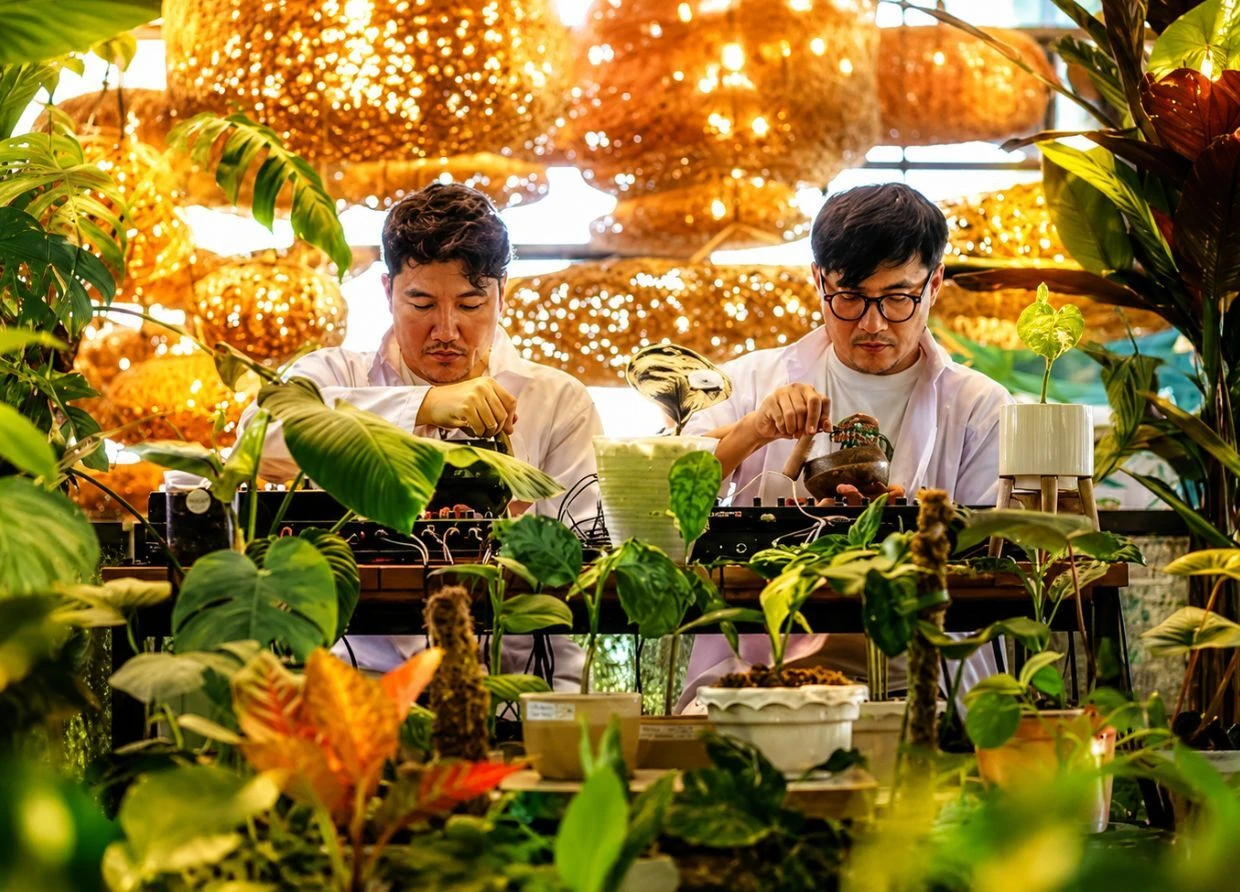





A man kneels beside a leaf, clips a small sensor to it, and waits. What comes out of the speakers isn't birdsong or wind it's a melody, built from the plant's own bioelectric signal. This isn't a lab experiment. It's a Tuesday for Bottlesmoker.
Bottlesmoker is an electronic music duo from Bandung, West Java, made up of Anggung "Angkuy" Suherman and Ryan "Nobie" Adzani. Since forming in 2006, they've built a career on turning things nobody thinks of as instruments plants, toy radios, city noise, a Nintendo DS into electronic compositions. Their price point for entry: none. Much of their early catalog was released free through Creative Commons, because, as Angkuy has said, music is knowledge that should belong to everyone.
At a glance:
- Formed in Bandung in 2006; both members are also university lecturers
- 2020: performed "Plantasia," a live set for an audience of roughly 150 potted plants
- 2023: toured India, Nepal, and Bangladesh under "Namaste Tour"
- Albums include Parakosmos (2017) and Puraka (2021), built around Indonesian folk instruments and field recordings
How did two radio students end up wiring plants to synthesizers?
Angkuy and Nobie met studying broadcasting at Universitas Padjadjaran, making jingles for class assignments. That habit turned into a duo, then into a decade of circuit-bent toys and bedroom-produced tracks. The real pivot came later, when both pursued graduate studies Angkuy's thesis on music archiving pulled him into ethnomusicology, and the pair started paying closer attention to instruments like the tarawangsa, a traditional bowed instrument from West Java they'd previously dismissed as old-fashioned.
That research shows up in a recent segment filmed for DW's "The Scene," aired via Metro TV, where the duo is seen recording outdoors Nobie bowing a tarawangsa, Angkuy working a kacapi rigged with cables and effects pedals, both seated on a bamboo platform overlooking hills in West Java.
Why does a plant "sing" in their music?
The plant-sound work started with Plantasia, a 2020 outdoor concert where the duo played not to people but to around 150 houseplants that fans dropped off some by taxi, some by motorbike courier. A biosensor reads the faint bioelectric activity on a leaf's surface and converts the signal into tone. It's not decoration; it fed directly into Puraka, their 2021 album about the relationship between humans, oxygen, and the natural world.
"So what we're doing doesn't turn into a misuse of culture the soul still has to be there, including its meaning and its value."
Anggung Suherman, Bottlesmoker
That line, from the DW segment, is the whole philosophy in one breath: borrow the form, keep the intent intact.
Is this considered cultural appropriation?
It's the exact tension the duo names out loud. Early on, playing alongside Karinding Attack a group built around the karinding, a West Java jaw harp Angkuy admits they privately viewed traditional instruments as uncool. Grad school reversed that. Now the rule is explicit: study the source, credit it, and don't flatten centuries of function into a texture pack.
Where can you actually hear them?
Beyond festival stages in Mongolia, the Netherlands, and Taiwan, Bottlesmoker's catalog sits on Bandcamp and streaming platforms, much of it still free to download. Their most recent international run took them through Kolkata, Kathmandu, and Dhaka in 2023 the first tour after pandemic-era cancellations in the US, Singapore, and Europe.
What started as two guys smoking near empty water bottles in a dorm room hence the name is now, seventeen-plus years in, a working argument that Indonesia's musical roots aren't a museum piece. They're raw material.