THE MAN WHO INTRODUCED BATIK TO THE WORLD WASN'T INDONESIAN
The man who first introduced batik to the world wasn't Javanese. Here's the true 1817 story behind batik's global fame and why it matters.




AT A GLANCE
- 1817 the year The History of Java was published in London
- 2 volumes, 66 engravings, one author
- 100+ batik motifs documented, with full production process
- 10 to 17 days how long one hand-drawn batik cloth takes to finish
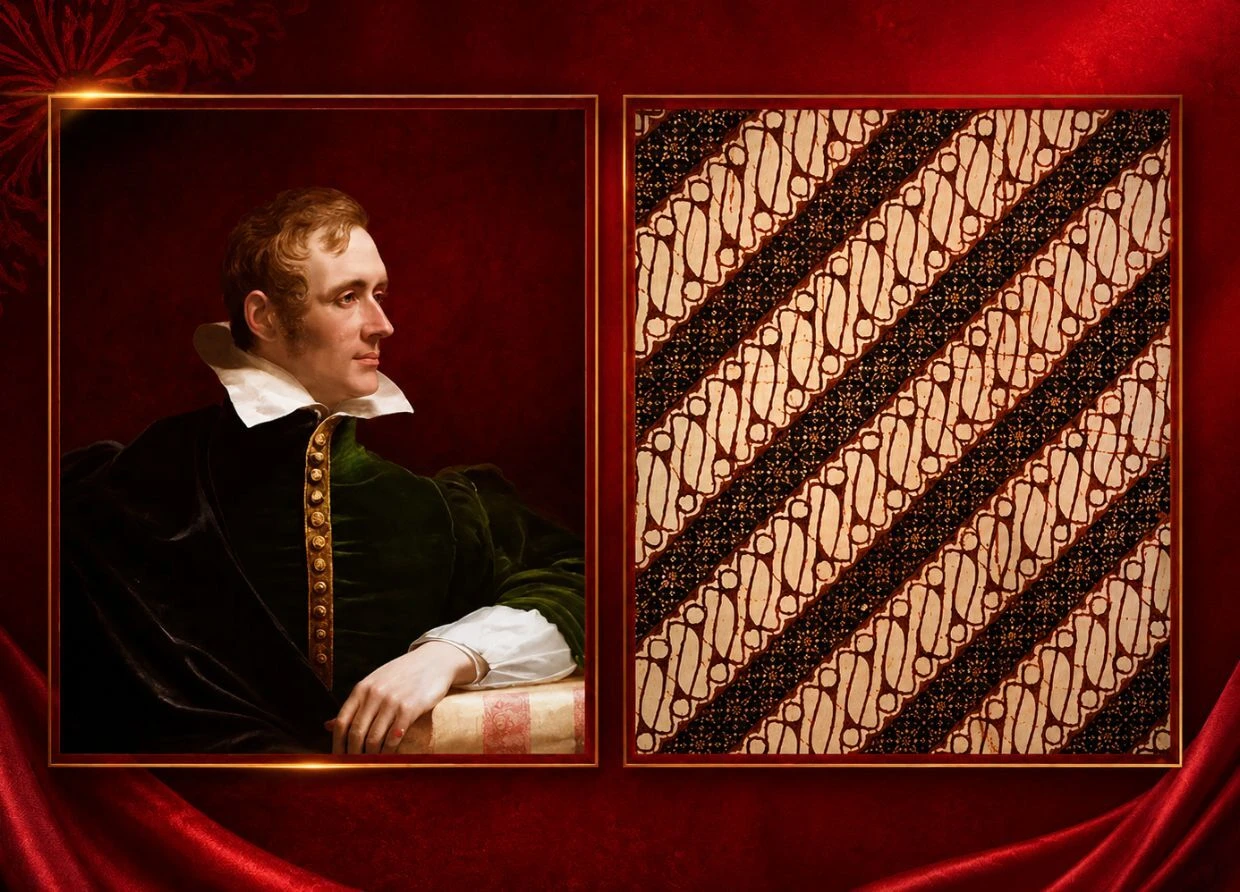
Picture a British governor sitting in his study in Java, taking careful notes on how local artisans dripped hot wax onto cotton with a small copper pen. That governor was Sir Thomas Stamford Raffles. And the book he wrote from those notes is the reason the rest of the world first heard the word "batik."
Most people assume batik's global reputation was built by Javanese hands alone. That part is true for the craft itself. But the written record that carried batik beyond Indonesia's shores came from an Englishman who commissioned artists to sketch batik clothing and described the painstaking work in his book.
Who was Thomas Stamford Raffles, and why did he write about batik?
Raffles served as Lieutenant-Governor of Java from September 1811 to March 1816. During that posting, he developed an intense curiosity about Javanese culture, architecture, and daily life. In 1817, he published his findings as a two-volume work titled The History of Java, printed in London.
The book wasn't just a political record. Its most striking feature is a set of sixty-six engravings, ten of them hand-colored, illustrating Javanese life and costume. Raffles covered nearly every aspect of Javanese life in detail farm tools, weaving looms, and equipment used for batik.
What did Raffles actually document about the batik process?
According to the account, Raffles described the technique step by step: cloth is first starched and sun-dried, then drawn on using a canting filled with hot wax, then dipped in dye. The wax-and-dye cycle repeats to deepen and sharpen the colors the same method still used by batik tulis artisans today.
He also recorded how long the work takes. A standard piece runs about 10 days. A complex motif can take 15 to 17 days of continuous, seated labor. That number alone reframes batik it's not a printed pattern, it's a multi-week commitment made one wax line at a time.
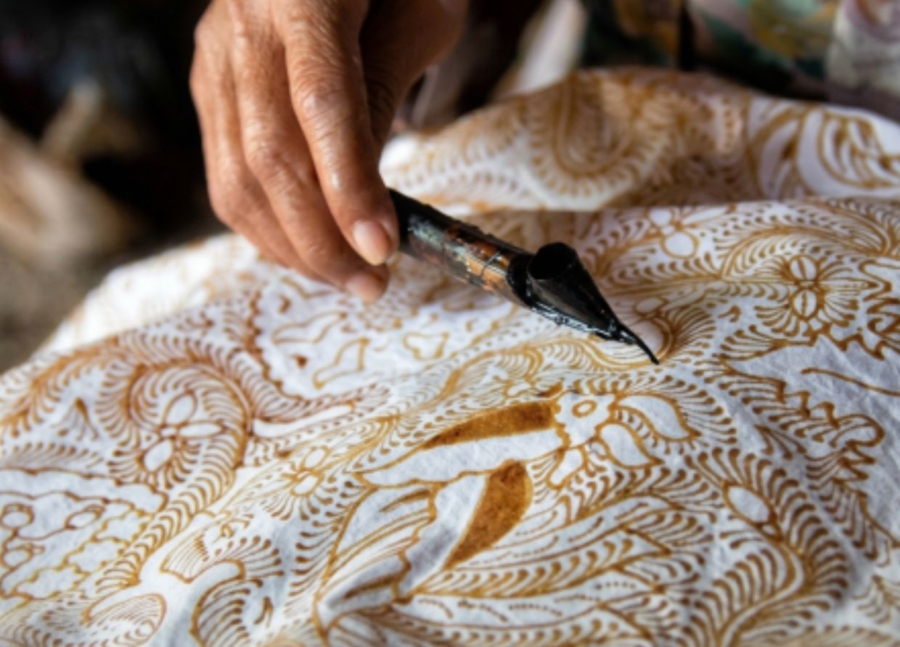
Credit : www.tangerangkota.co.id
Why does this matter for how we talk about batik today?
Because it flips a common assumption. Raffles' book is much more than a history it provides a detailed account of Javanese geography, resources, agriculture, ceremonies, language, and religion, and batik sat inside that larger record as one thread among many. It was a colonial officer's curiosity, not a Javanese publicist, that put batik motifs on paper for a European audience for the first time.
That doesn't erase who made batik. It just means the documentation that traveled to Europe carried a different name on the cover. As one Jakarta-based textile historian put it:
"The hands that made batik were always Javanese. The hand that first wrote it down for the West wasn't. Both facts can be true, and neither one cancels the other out."
Today, batik is recognized by UNESCO as an Intangible Cultural Heritage of Humanity, credited to Indonesia. But the paper trail that first carried it into European libraries and drawing rooms started with a governor's notebook in 1817 two centuries before Instagram carousels started retelling the story to a new generation of Indonesians who never learned it in school.