THESE MIDDLE SCHOOLERS FROM BINTARO JUST BEAT 58 COUNTRIES WITH A TRADITIONAL ACEHNESE DANCE
Bintaro's Tim Ratoh Jaroe SMP Auliya wins gold at World Dance Festival 2026 in Bali, beating 58 countries with traditional Acehnese dance.
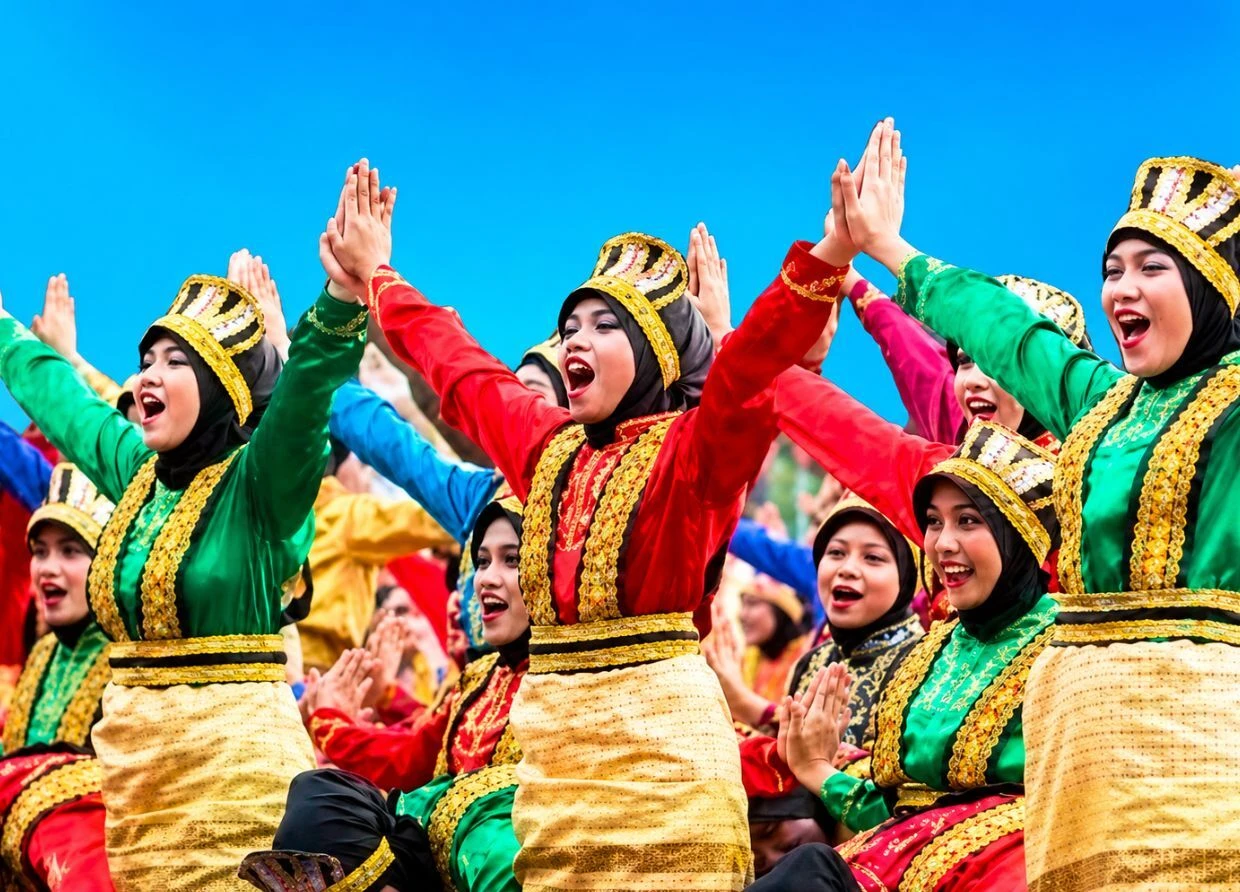





Somewhere in Bali last week, a group of middle school students sat cross-legged on a stage, their colorful Acehnese costumes catching the light, moving in perfect unison to rhythms that have existed for centuries. The audience had no idea they were about to watch the winning performance of the entire competition.
Tim Ratoh Jaroe SMP Auliya, a traditional dance team from SMP Auliya in Bintaro, South Tangerang, took home the gold medal at the 15th World Dance Festival 2026, held in Bali from May 13 to 16. Competing in the Folk Dance Children Group category, they outperformed 58 other participants representing countries from across the globe performing Tari Ratoh Jaroe, one of Aceh's most iconic traditional dances.
What Is Tari Ratoh Jaroe ?
Ratoh Jaroe is a fast-paced, highly synchronized group dance from Aceh, Sumatra. Dancers perform seated or kneeling, executing rapid hand claps, chest taps, and swaying movements in precise coordination often with dozens of performers moving as one body. The visual effect is hypnotic. Miss a single beat, and the whole pattern falls apart.
That level of discipline, trained into students as young as 12 or 13, is exactly what judges at an international festival notice immediately.
A School From Bintaro With a Global Track Record
Here's the part that surprises people: this isn't a one-time win. Tim Ratoh Jaroe SMP Auliya has been quietly building one of the most decorated international résumés in Indonesian youth dance and most people outside Bintaro have never heard of them.
Before Bali 2026, the team already held 1st place at World Dance Festival 2025 in Seoul, 2nd place at the Llangollen International Musical Eisteddfod in Manchester, and 1st place at the Super Cup Performing Arts Competition 2024 in Spain. Three continents. Multiple podium finishes. All from a junior high school in a South Tangerang suburb.
Why This Win Feels Different
Winning an international competition in your home country carries its own kind of pressure. There's no travel fatigue to blame if something goes wrong and no easy excuse if the crowd expects too much. Performing in Bali, in front of an audience that already knows what Indonesian traditional dance looks like, the standard is higher.
That consistency is the real story. Not one lucky performance a system, a school, and a group of teenagers who have made carrying Acehnese culture abroad their actual identity.
What Makes SMP Auliya's Approach Work
The team's strength isn't just talent it's repetition, cultural rootedness, and the specific intensity of Ratoh Jaroe as a discipline. The dance demands that every performer suppress individual expression entirely in favor of collective precision. For young performers, that's a counterintuitive skill and one that transfers.
Schools in Indonesia have quietly been producing world-competitive traditional dance programs for years. SMP Auliya is among the best examples of what happens when a school treats cultural arts as seriously as academic subjects.