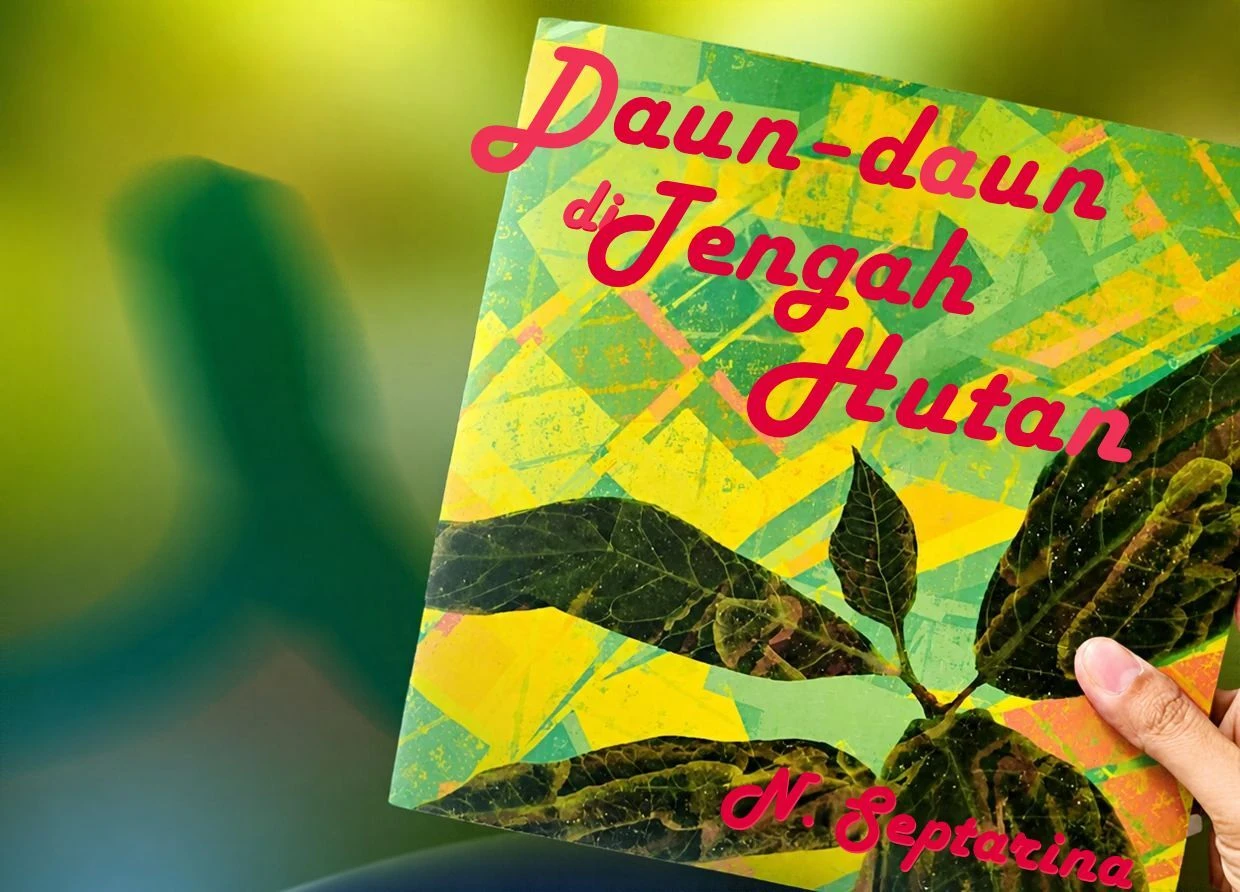
DAUN-DAUN DI TENGAH HUTAN: THE ZINE ON EATING WILD LEAVES
Daun-Daun di Tengah Hutan is an illustrated zine by N. Septarina that turns wild leaves into food stories. Here’s what’s inside and why it matters.



At a glance
- 1 illustrated zine, Daun-Daun di Tengah Hutan
- 1 fictional guide, Djentik Manis
- [X] pages (add from the zine)
A girl in a yellow shirt leans into a bush and pulls out a handful of leaves. An older woman, Makcik Ni, watches her. This is not a cooking show or a survival guide. It’s one page of a zine, and it may change how you look at the weeds on your street.
What is Daun-daun di Tengah Hutan?
Daun-Daun di Tengah Hutan (Leaves in the Middle of the Forest) is a pictorial zine by illustrator and writer N. Septarina, known online as Septin (@alovelypaw). It was featured by Creative by Indonesia, the creative economy platform. It tells an illustrated story about foraging, the old habit of gathering wild plants to eat.Its main character is Djentik Manis, a fictional girl who learns the plants from a family elder.
View this post on Instagram
Who is Septin, the illustrator behind it?
Septin describes herself as an aspiring illustrator and writer drawn to visual storytelling. She has lived in several regions across Indonesia, and each place gave her new local snacks and food traditions to notice.
That’s the real engine of the zine. It doesn’t come from a research trip or a trend. It comes from years of eating, moving and paying attention.
What is the zine actually about?
The zine asks readers to see wild leaves in two ways at once, as ordinary plants and as possible food. It takes a farm-to-table view, but a very old one, where the “farm” is a forest edge and the “table” is a family kitchen.
Each page is built around a plant. One spread features kencur (Kaempferia galanga), with Djentik Manis drawn tiny beside its leaves. The text describes the leaves as young and tender, with a taste that is fresh and slightly sharp.
Here’s the surprising part. Most of us know kencur only by its rhizome, the root that flavors jamu and pecel sauce. The zine puts the leaves in front. It’s a small shift, but it shows how much of a familiar plant we may have been ignoring.
Why does a zine about leaves matter now?
Because the knowledge is easy to lose, the zine says this food tradition has been passed down through generations. Passed-down knowledge only survives while someone is still passing it on.
A zine is a good tool for that. It’s cheap, personal, and easy to share. Septin pairs soft drawings with short, story-like text, so a reader gets a character to follow instead of a plant manual to memorize.
It also fits a wider shift. Many urban readers now want to know where food comes from. Septin’s answer is not a trend. It’s a grandmother’s answer, drawn by hand.