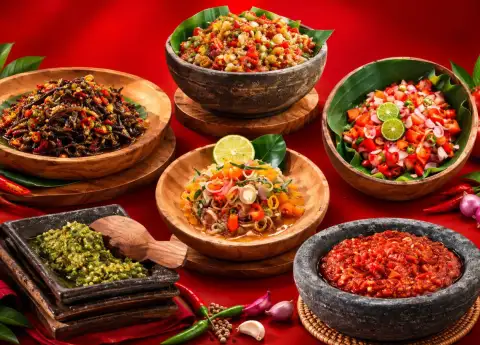
THE SAGO WORM MILLIONS OF INDONESIANS EAT
Sago Worm, Indonesia's sago palm grub, packs 25.8g of protein per 100g. Here's what it tastes like, where to find it, and why it keeps going viral.





At a glance
- 25.8g protein per 100g dry weight on par with lean meat
- 583 kcal of energy per 100g dry weight
- Harvested primarily in Kalimantan, Papua, and Eastern Indonesia
- Scientific name: Rhynchophorus ferrugineus larvae of the red palm weevil
A hand disappears into a rotting log up to the wrist. When it comes back out, it's holding something the size of a thumb, pale gold, and very much alive.
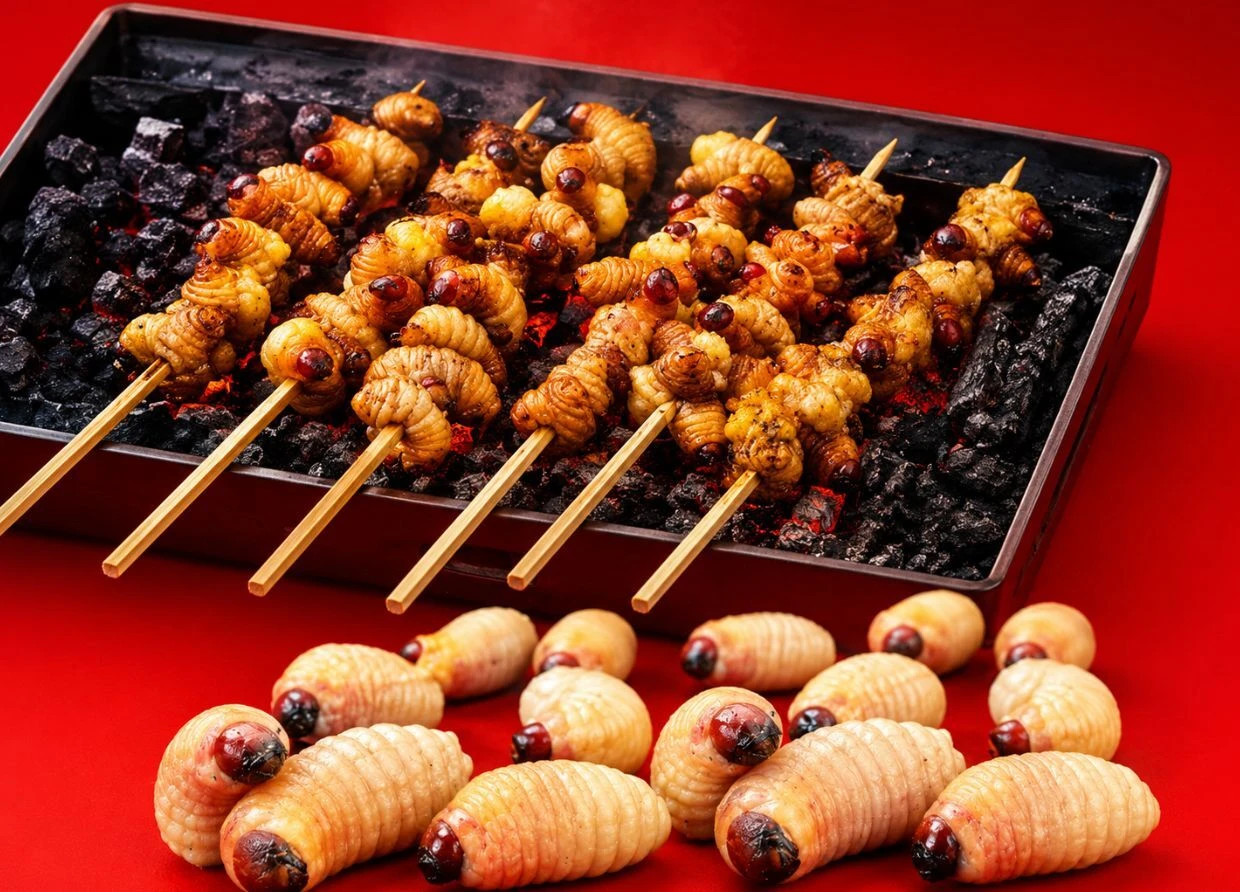
Sago Worm is the larva of the sago palm weevil, a beetle that lays its eggs inside decaying sago, aren, coconut, and lontar palm trunks. Communities across Kalimantan and Eastern Indonesia have eaten it for generations not as a shock-value snack, but as a legitimate, high-protein food source in regions where other animal protein is harder to come by. It's typically eaten raw, grilled, skewered as satay, or fried, and it shows up at family meals as often as it shows up on adventure travel reels.
What Exactly Is Sago Worm?
Strip away the "extreme food" framing and ulat sagu is simply insect protein the same category as the crickets showing up in protein bars in Europe and the US. Research from Universitas Cenderawasih puts dried ulat sagu at 25.8 grams of protein per 100 grams, alongside 38.5 grams of fat and 583 kilocalories. That protein density is comparable to grilled chicken breast, minus the farmland.
Where Do People Actually Eat It?
Papua and the Asmat and Kamoro communities treat sago worm locally called koo as more than food; it appears in naming ceremonies and celebrations. In Kalimantan, it's harvested from felled sago palms and often grilled straight over coals. It has also spread as a street-food novelty in parts of Sulawesi and North Sumatra, usually served as satay with sweet soy glaze.
How Much Does Sago Worm Cost?
Prices swing hard by region and season. In harvest areas, a portion can go for as little as Rp10,000–20,000, since it's foraged rather than farmed. In cities where it's sold as a novelty street snack or at food festivals, expect Rp25,000–50,000 for a skewer or small container closer to specialty-food pricing than everyday grocery pricing.
Is It Actually Safe to Eat?
Yes when sourced from healthy palm trunks and prepared with basic hygiene. Nutritionists note sago worm also carries iron, zinc, calcium, and B-complex vitamins, and its essential amino acid lysine is present at levels some studies say exceed beef and chicken. The bigger risk isn't the worm itself; it's undercooking or poor cleaning, the same rule that applies to any raw protein.
The texture is the real hurdle for newcomers: a soft, custardy interior with a light snap on the outside when grilled, and a mild, nutty taste that picks up whatever it's cooked with. In 2023, a video of a schoolboy mocked for bringing ulat sagu in his lunchbox went viral nationwide a moment that ended up doing more to normalize the food than any campaign could.