6 TRADITIONAL INDONESIAN FERMENTED FOODS BEYOND TEMPEH
Explore 6 traditional Indonesian fermented foods beyond tempeh from oncom and tape to buffalo milk dadih and fermented durian tempoyak.





Bite into a block of oncom and you'll notice something odd: it's fuzzy, orange-tinted, and smells nothing like tofu yet it comes from the same soy waste. That's fermentation doing its quiet, strange work, and Indonesia has been perfecting it for centuries, long before "gut health" became a hashtag.
Traditional Indonesian fermented foods go far beyond the tempeh most people know. They span at least six regions and three main food categories: soy/legume-based, milk-based, and fruit-based. Home cooks in West Java, North Sumatra, West Sumatra, South Sulawesi, and the Riau/Jambi region have relied on wild yeasts, molds, and lactic acid bacteria to turn soybean pulp, cassava, buffalo milk, and even overripe durian into shelf-stable, flavor-packed staples some ready in as little as two days, others needing a full week.
At a glance:
- 6 fermented foods featured, from 5 different Indonesian regions
- Dadih ferments for 2–3 days inside bamboo tubes
- Dali ni Horbo and Dangke are both made from buffalo milk, coagulated using papaya latex or juice instead of rennet
- Oncom uses two different molds Neurospora (red oncom) or Rhizopus (black oncom)
What is oncom, and how is it different from tempeh?
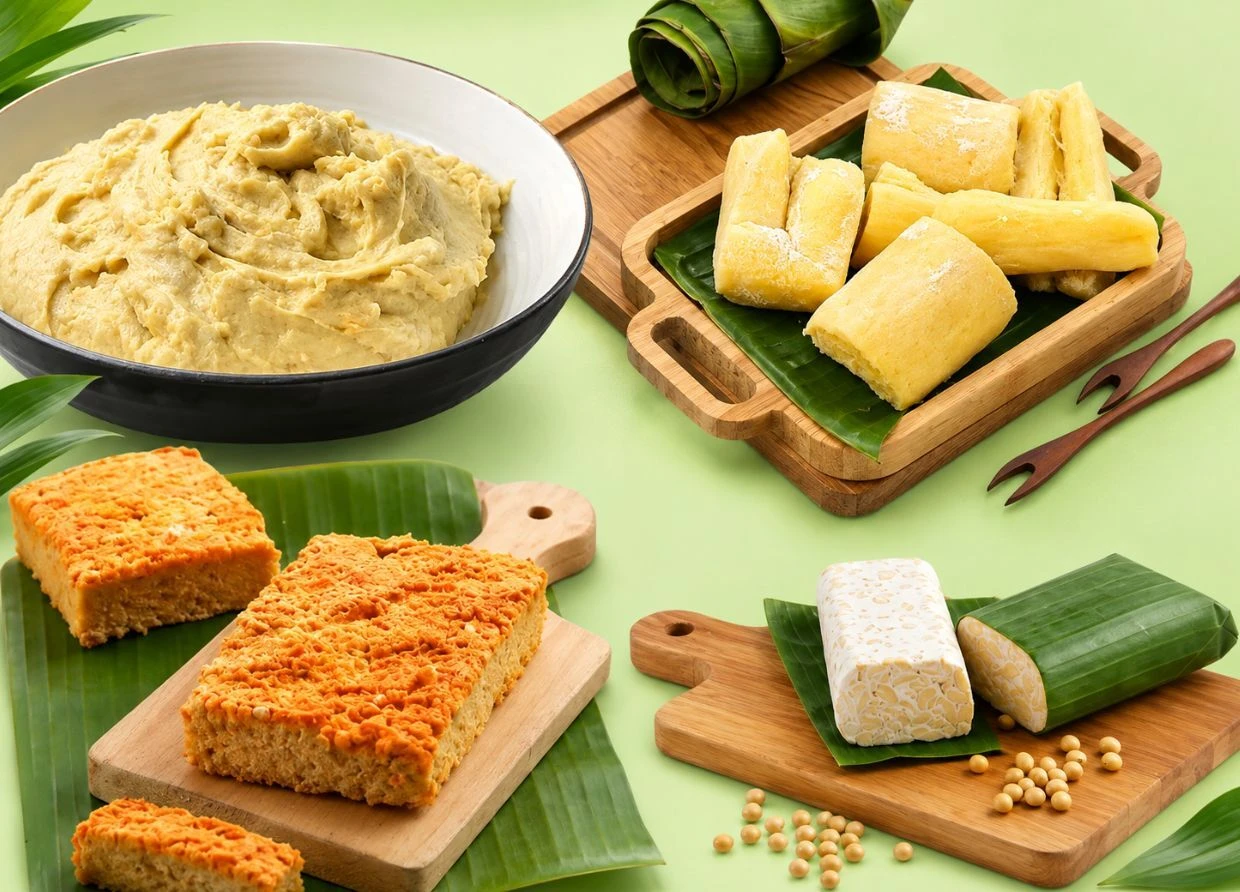
Oncom is made by fermenting soybean or peanut press cake the leftover pulp after oil or milk extraction using either Neurospora mold, which produces the orange "red oncom," or Rhizopus, which produces black oncom. It's a Sundanese specialty from West Java, typically fried, grilled, or stuffed into fried snacks like combro.
What is tape, and why does it taste slightly boozy?
Tape is fermented cassava or glutinous rice, made using ragi a starter culture combining mold and yeast. The yeast produces a light alcohol content alongside sugar, giving tape its signature sweet-sour, faintly fermented-alcohol flavor. It's common across Indonesia and often eaten as a light snack or dessert.
What is dali ni horbo, the "cheese" of the Batak people?
Dali ni horbo is buffalo milk curdled using the juice of papaya or pineapple leaves, then left to ferment with lactic acid bacteria. Made by the Batak community in North Sumatra, it has a tofu-like texture and is often nicknamed "Batak cheese," despite predating any European cheese-making influence in the region.
What is dadih, and how does it differ from regular yogurt?
Dadih is a Minangkabau specialty from West Sumatra: raw buffalo milk poured into bamboo tubes, sealed, and left for two to three days until it thickens into a tangy, custard-like curd. Unlike commercial yogurt, dadih isn't fermented with lab-cultured bacteria the bamboo itself carries the microbes that do the work.
What is dangke, and what does it taste like?
Dangke is a traditional cheese from Enrekang, South Sulawesi, made by curdling buffalo milk with papaya sap and shaping it inside a coconut shell mold. The result is mild, savory, and soft often pan-fried until the outside turns golden and slightly crisp, with a creamy center reminiscent of firm tofu.
What is tempoyak, and how do Indonesians use it in cooking?
Tempoyak is fermented durian flesh, made from fruit that's gone past ideal ripeness. The fermentation process mostly wild lactic acid bacteria mellows the durian's intensity into a tangy, faintly sweet-salty paste. It's rarely eaten alone; instead, it's cooked into fish or vegetable dishes as a pungent, umami-heavy condiment, especially in South Sumatra, Jambi, and parts of Malaysia.
The surprising part? None of these use factory-produced starter cultures. Bamboo tubes, banana leaves, papaya latex, and ambient wild yeast do the job a reminder that Indonesia was running sophisticated fermentation science before "probiotic" became a marketing word.