BEST INDONESIAN COFFEE 2026: GAYO COFFEE TOPS THE WORLD
Indonesian coffee just made global headlines Gayo Coffee ranks 1 on TasteAtlas 2026 and exports hit $2.5 billion. Here's the full story.
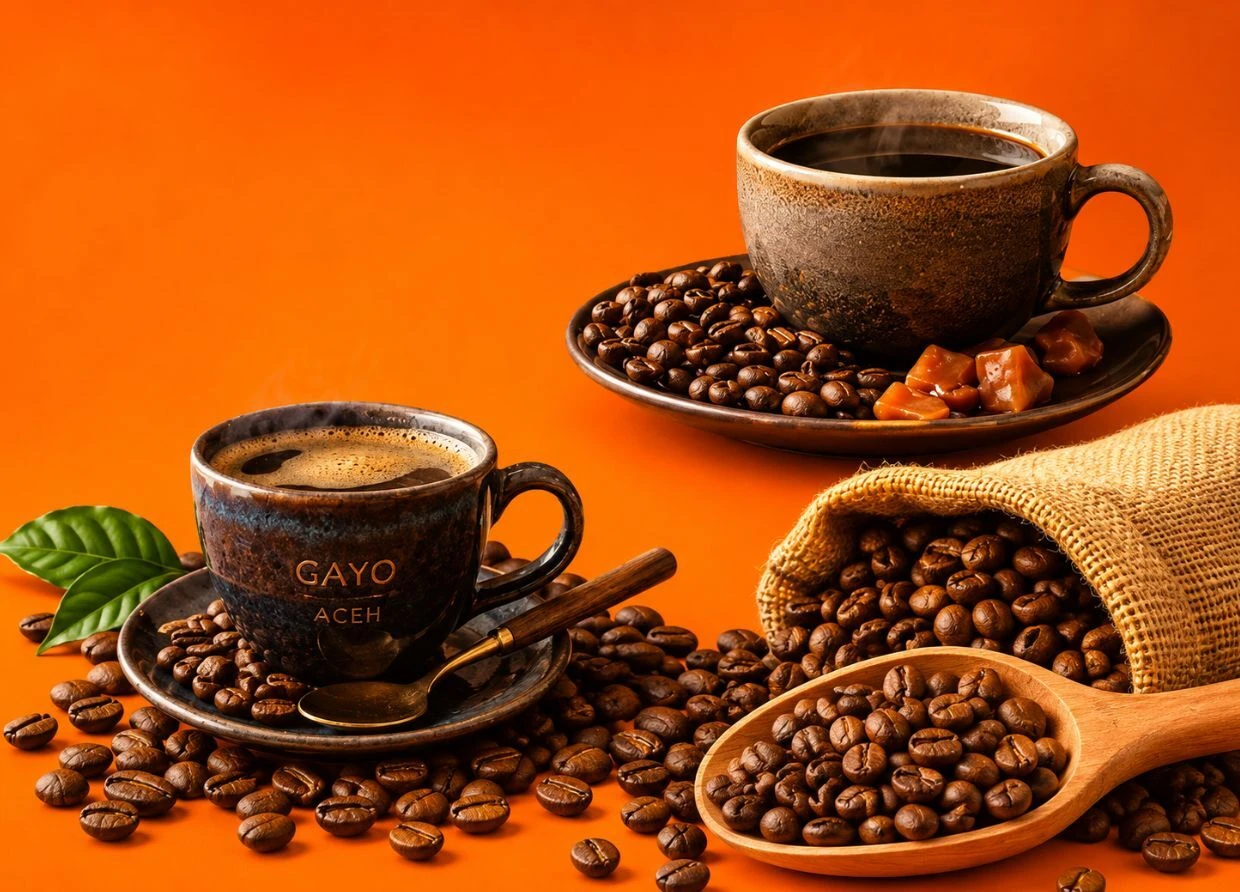



A single-origin coffee grown on volcanic slopes in Aceh just beat some of the most storied coffee regions on Earth. That's the headline. The bigger story is what's happening behind it: Indonesian coffee is quietly becoming one of the country's most valuable exports, even as it slips down the world production rankings.
Indonesian coffee refers to coffee grown across the archipelago's volcanic highlands Aceh, North Sumatra, Bali, West Java, Lampung, Central Java, and South Sulawesi known for earthy, low-acid profiles shaped by wet-hulling processing. As of July 15, 2026, TasteAtlas updated its Top 9 Indonesian Coffee ranking, placing Gayo Coffee–Kopi Luwak from the Gayo Highlands in Aceh at number one, with a 4.9/5 rating. Indonesia is currently the world's fourth-largest coffee producer, and its coffee exports were worth $2.5 billion in 2025.
At a glance:
- 12.4 million bags (60kg each) Indonesia's annual coffee production, ranking it #4 globally
- 4.9/5 TasteAtlas rating for Gayo Coffee–Kopi Luwak, Indonesia's top-ranked coffee for 2026
- $2.5 billion value of Indonesia's coffee exports in 2025, up from $311 million in 2000
- 60,170 tons coffee shipped to Belgium in 2025, now Indonesia's top export destination
What Makes This Indonesian Coffee Rank #1 in 2026?
Gayo Coffee comes from the Gayo Highlands, a plateau in Central Aceh sitting roughly 1,200 meters above sea level. The altitude, volcanic soil, and cool nights slow down how the coffee cherries ripen, which is part of why cuppers describe the beans as syrupy and low in bitterness.
The "Kopi Luwak" tag attached to this listing refers to a processing method involving the Asian palm civet, long associated (rightly or controversially) with some of the country's most expensive coffee. TasteAtlas ranked it above eight other Indonesian coffees, including well-known names from Bali, North Sumatra, West Java, Lampung, Central Java, and South Sulawesi.
"Every region here tastes different because the soil and altitude force it to," is how growers in the Gayo Highlands often explain the flavor swings between valleys just a few kilometers apart.
How Much Coffee Does Indonesia Actually Produce?
Indonesia produced an estimated 12.4 million 60-kilogram bags in the most recent crop year, according to Warta Ekonomi's breakdown of global output. That puts it fourth in the world behind Brazil (63 million bags), Vietnam (30.8 million), and Colombia (13.8 million), but ahead of Ethiopia (11.6 million) and Uganda (6.9 million).
That ranking hasn't moved much in years. What has changed dramatically is where Indonesia's coffee actually ends up.
Where Does Indonesia's Coffee Actually Go?
This is the part that surprises people: Japan used to be Indonesia's single biggest coffee buyer, importing 65,327 tons back in 2000. By 2025, that number had collapsed to just 9,160 tons, according to BPS (Statistics Indonesia) data compiled by GoodStats.
In its place, Belgium became Indonesia's top destination in 2025 at 60,170 tons, followed by the United States (57,155 tons) and Germany (53,715 tons). Malaysia's imports also jumped, from 7,422 tons in 2000 to 26,653 tons in 2025 a sign of how regional demand, not just Western markets, is reshaping the trade.
Total export value climbed from $311 million in 2000 to $2.5 billion in 2025, even without a matching jump in volume. That gap points to something specific: Indonesia is increasingly selling higher-value, specialty-grade beans rather than bulk commodity coffee, which is exactly the category Gayo Coffee sits in.
The question now is whether recognition like the TasteAtlas ranking translates into Indonesia climbing past Vietnam and Colombia in output or whether its real advantage stays in quality and price per kilogram rather than volume.