
FORK AND KNIFE ETIQUETTE SIGNALS: WHAT'S REAL AND WHAT'S JUST A VIRAL INSTAGRAM CHART
That viral fork-and-knife chart on Instagram? Etiquette pros say only 2 of the 6 "signals" are real. Here's what actually works.
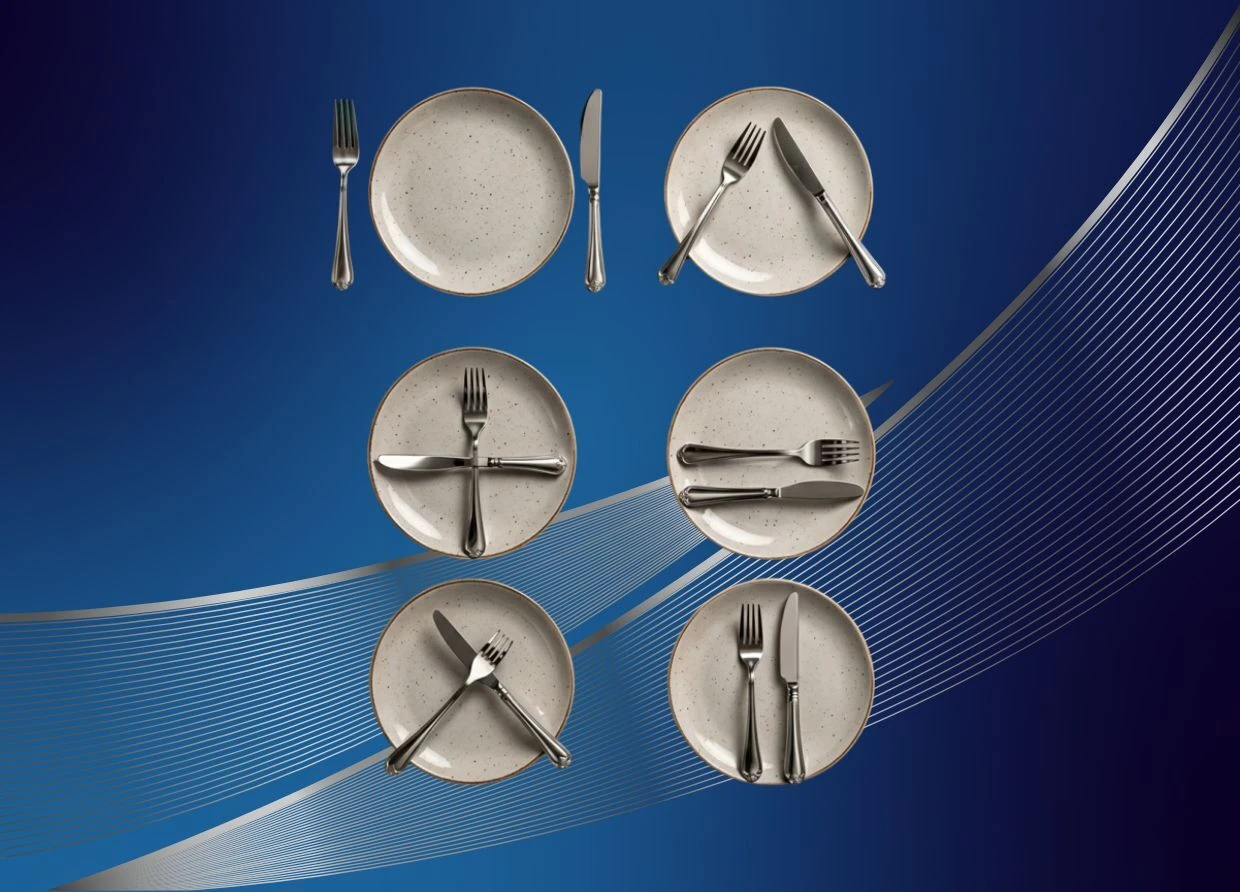





You've probably seen it. A dark wood table, six white plates, cutlery arranged into little diagrams "Start," "Pause," "Next Dish," "Excellent," "Didn't Like It," "Finished." It looks like something out of a European finishing school. It's been shared 751 times and liked by thousands, captioned as an insider secret "most people never learn."
Here's the problem: half of it is invented.
Fork and knife etiquette signals are a real, documented part of formal dining but they only cover two situations: pausing mid-meal, and being finished. Etiquette educator Candace Smith, who trains hospitality professionals, has publicly flagged this exact graphic as misinformation that keeps recirculating across dozens of websites. There is no traditional signal for "excellent" or "didn't like it." No waiter, anywhere, has been trained to read your cutlery angle as a Yelp review.
At a glance:
- 6 positions shown in the viral graphic only 2 have any basis in real etiquette
- 2 recognized global styles: American and Continental (European), with different rules for each
- 1850s is roughly when the Continental style of holding cutlery became fashionable among Europe's upper class
- Rp 500,000–1,500,000 the typical per-person bill at a Jakarta fine-dining restaurant, where this stuff actually gets tested
Where did the real etiquette come from?
The real system dates back further than Instagram, obviously. Around the mid-1800s, Europe's upper class shifted how they held their fork and knife, and the Continental style was born fork in the left hand, tines down, knife doing the cutting in the right. The American style kept the older habit of switching the fork to the right hand after cutting. Both styles developed their own quiet cutlery language for talking to waitstaff without saying a word.
What do the real signals actually mean?
In the American style, "still eating" means crossing your knife and fork loosely across the plate, fork tines up. "Finished" means placing them side by side at the 4 o'clock position on the plate, fork tines still up.
In the Continental style, the logic is the same but the fork tines point down instead of up, both when resting and when finished. That's it. Two positions, two meanings, each style consistent within itself.
So why does the "six signals" chart keep going viral?
Because it's satisfying content. A clean grid of plates with confident one-word labels reads like insider knowledge, and it's built to be shared, not verified. The three fake positions "next dish," "excellent," "didn't like it" were never part of any documented etiquette tradition. They were designed for engagement, not for waitstaff.
"I saw a graphic circulating on social media depicting positions of dining utensils to relay a message to a server... it's a particular false infographic that appears on dozens of websites."
That's the exact warning from etiquette professionals who train restaurant staff for a living. If your waiter has never been taught it, it isn't a signal it's just cutlery on a plate.
Does this actually matter at a real dinner?
Only if you're at a genuinely formal restaurant with staff trained in classic service, which is rarer than the internet suggests. At most modern restaurants including the buzzy fine-dining spots opening across Jakarta and Bali a simple "I'm still working on this" or a raised hand does the job fine.