
LAPIS LEGIT: THE 20-LAYER INDONESIAN CAKE THAT TAKES HOURS TO BAKE
Lapis legit is Indonesia’s 20-layer spice cake. Learn how it’s made, where it comes from, and why it’s served at Eid and Chinese New Year.
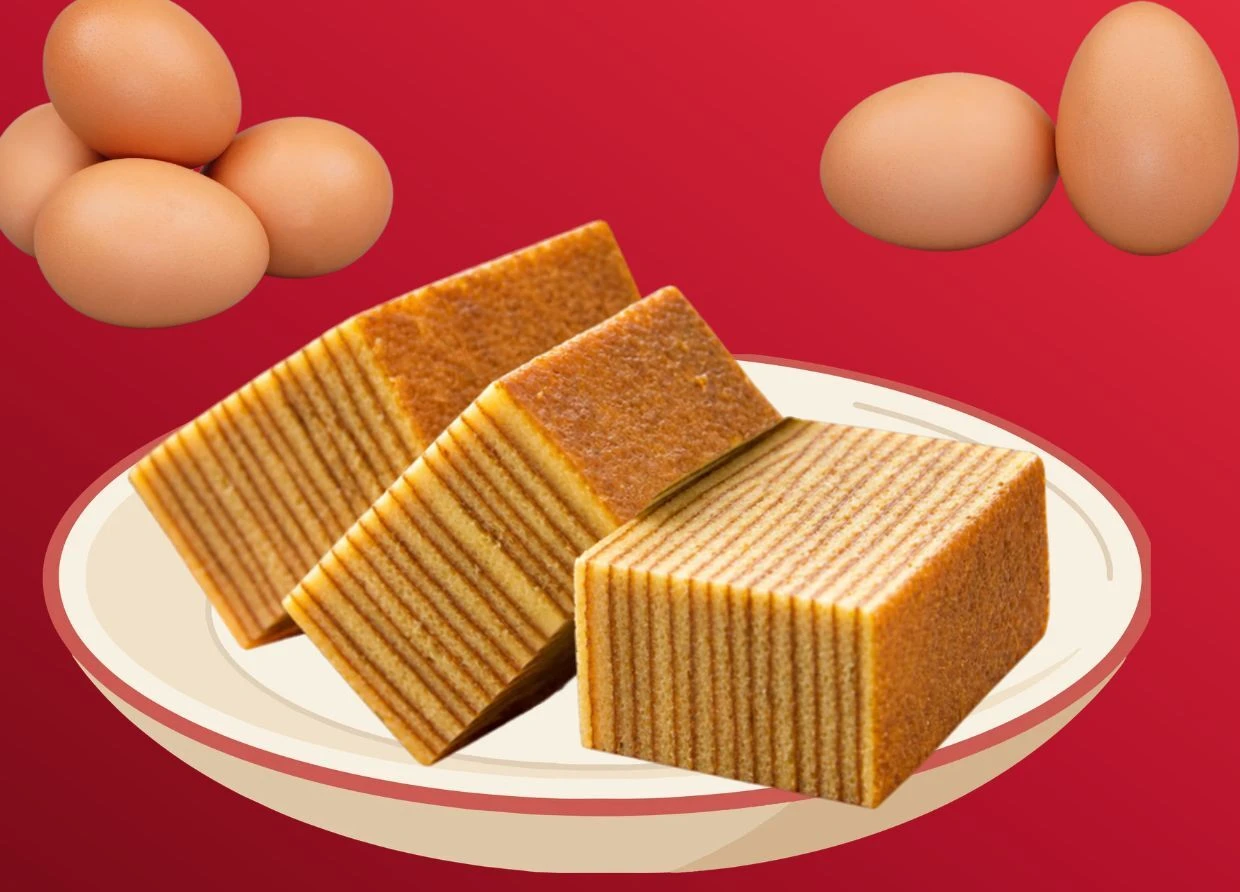





At a glance
- Layers: about 20
- TasteAtlas score: 3.9 out of 5
- Cakes in the ranking: 12 countries
- Served at: Eid and Chinese New Year
A baker pours one spoon of batter into a pan and slides it under a hot grill. She waits until the top turns brown, then pours the next layer. She does this about 20 times. That patience is what makes lapis legit.
Lihat postingan ini di Instagram
What is lapis legit?
Lapis legit is an Indonesian spice cake made of about 20 thin layers. The main ingredients are butter, egg yolks, flour, sugar and warm spices. It grew out of the Dutch colonial era and is now served in small slices at Eid and Chinese New Year. A whole loaf from a good bakery often costs several hundred thousand rupiah, which is why it is a celebration cake and not an everyday snack.
How is lapis legit made?
Each layer is baked on its own. The baker spreads a thin coat of batter, browns it under strong top heat, then adds the next coat. Nothing rises much, so the cake turns out dense and tight, almost like fudge.
The batter uses a lot of butter and egg yolks. That gives lapis legit its rich, buttery taste, and the spices add a warm, slightly smoky smell. Think cinnamon, clove, nutmeg and cardamom. Open a loaf and the smell hits you before you take a bite.
Where does lapis legit come from?
The cake traces back to the Dutch spekkoek. In the Netherlands, the name comes from the word for bacon, because the stripes look like layers of fat and meat. Indonesian bakers made it their own with local spices and a much heavier hand with butter.
Here is the surprising part. Lapis legit scored 3.9 on TasteAtlas. That is lower than Russia’s Medovik at 4.3 and Germany’s Baumkuchen at 4.0. Yet in Indonesia, few cakes carry more meaning at the table.
Why is it served at Eid and Chinese New Year?
Because it is hard to make, it works as a gift. Giving a lapis legit tells the other person you spent time and money on them. Families cut it into thin slices and put it out for guests.
Many bakers say this cake leaves no room for shortcuts. [Insert a real quote from a named Indonesian baker or cake shop owner here, with their full name and business.] That is the voice this article needs.
How is it different from other layer cakes?
TasteAtlas’s “Layer Cakes Around the World” post lines up 12 cakes. France’s Gâteau Mille Crêpes uses thin crepes. Hungary’s Dobostorta is topped with caramel. Iceland’s Vínarterta has jam between the layers.
Lapis legit is different in a simple way. There is no cream and no jam between the layers. Every stripe you see is cake, baked one at a time, so the structure is the flavor.
Can you make lapis legit at home?
You can, but plan for a long afternoon. A home oven needs a strong top heat or a grill setting to brown each layer. Most home bakers say the first try is too thick or too dry, and the fix is usually thinner layers. If you want to skip the work, a good bakery will sell you a loaf.