INDONESIA'S TRADITIONAL CHEESES: 3 LOCAL VARIETIES YOU PROBABLY NEVER KNEW EXISTED
Indonesia has its own traditional cheeses Dangke, Dadiah, and Dali ni Horbo made with papaya sap and bamboo fermentation, no rennet required.





Most people assume cheese is a European import that arrived in Indonesia through colonial kitchens and modern supermarkets. That assumption is wrong. Long before mozzarella showed up on a warung menu, communities in Sulawesi and Sumatra were curdling buffalo and cow milk using papaya sap, pineapple water, and bamboo fermentation techniques that predate refrigeration entirely.
At a glance:
- 3 traditional Indonesian cheeses: Dangke, Dadiah, and Dali ni Horbo
- Origins span 2 islands: Sulawesi and Sumatra
- Main ingredient: buffalo or cow milk, no rennet or industrial enzymes used
- Texture range: from firm and tofu-like to thick, sour yogurt-style curd
This is the definition paragraph for snippet purposes: traditional Indonesian cheese refers to a category of fermented or coagulated milk products made by regional communities in Sulawesi and Sumatra, using natural coagulants like papaya sap or fruit acid instead of commercial rennet, typically sold wrapped in banana leaves or packed inside bamboo, priced affordably at local markets, and consumed as a savory side dish rather than a dessert cheese.
What Are Indonesia's Traditional Cheeses ?
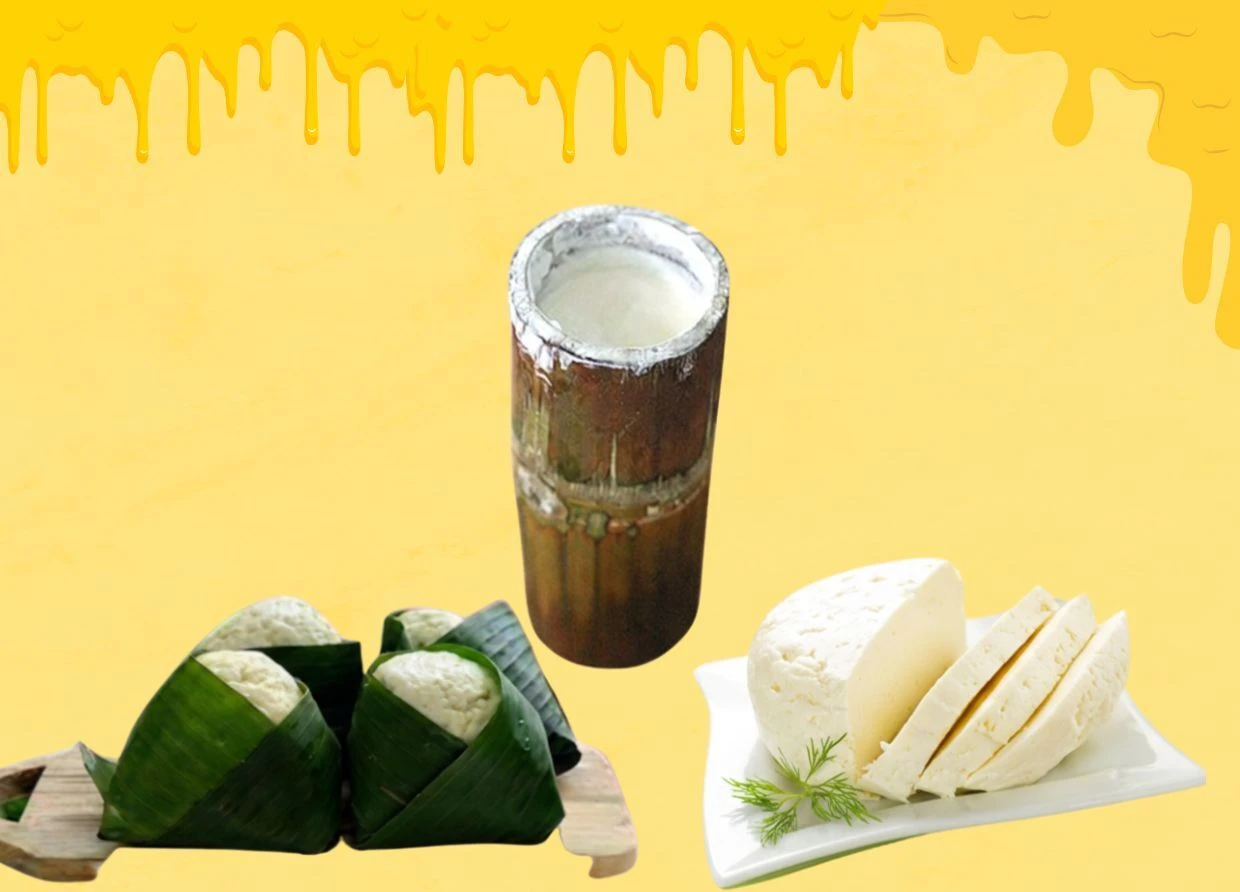
Dangke comes from Enrekang, South Sulawesi. It's made from buffalo or cow milk coagulated with papaya sap, giving it a firm, tofu-like texture. It's usually wrapped in banana leaf and then grilled or fried before eating, which adds a smoky edge to its mild, milky flavor.
Dadiah is from West Sumatra, and the production method is genuinely unusual: raw buffalo milk is poured into hollowed bamboo segments, sealed with banana leaf, and left to ferment naturally. The result is closer to thick, tangy yogurt than what most people picture as cheese sour, cool, and slightly grainy on the tongue.
Dali ni Horbo belongs to the Batak people of Tapanuli, North Sumatra. Buffalo milk is cooked with pineapple water or papaya leaf until it thickens into a soft curd. It's commonly served alongside arsik, a spiced fish dish, where the cheese's mild tang balances the dish's heat.
How Much Does Traditional Indonesian Cheese Cost?
Prices stay low because production is small-scale and local. Dangke typically sells for Rp 15,000–25,000 per piece in Enrekang markets. Dadiah, sold by the bamboo segment, runs similarly low, often under Rp 30,000 depending on size and vendor. These are not boutique prices they're everyday food prices, which is part of why they've stayed under the radar nationally.
"Dadiah isn't something you find in a supermarket you find it because someone's grandmother still makes it the way her grandmother did." based on commentary from regional food accounts documenting the dish, including @gheamirrela on Instagram.
What makes these cheeses worth talking about isn't just the taste it's the method. None of them require imported cultures, industrial rennet, or temperature-controlled aging rooms. They were solved, regionally, using fruit and bamboo, centuries before "natural fermentation" became a wellness buzzword.
Why Don't More People Know About This?
Distribution is the main barrier. These cheeses are hyperlocal Dangke rarely leaves Enrekang, Dadiah rarely leaves West Sumatra so most Indonesians outside those provinces have never tasted them, let alone heard of them. Social media accounts like nibble.idn have started changing that by documenting regional foods that never made it into national food media.