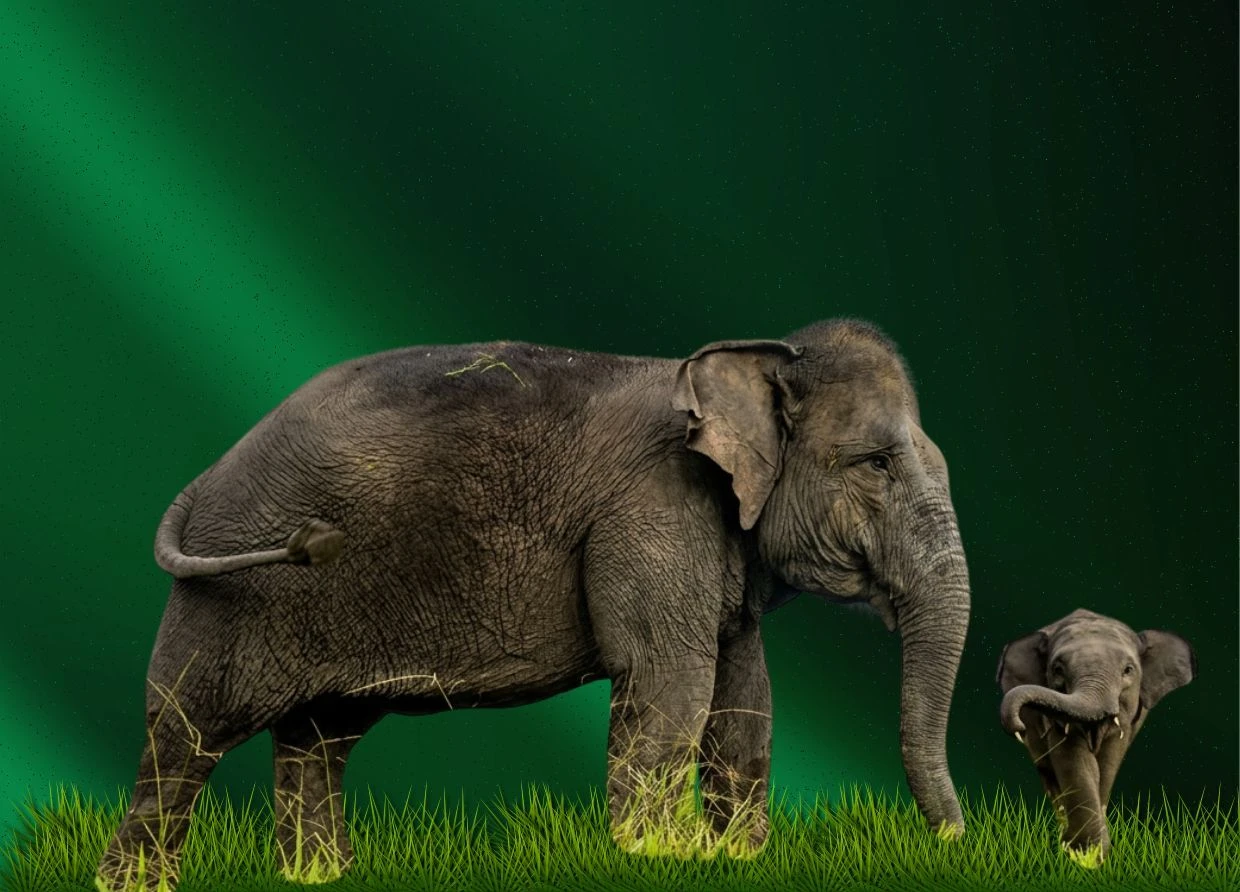
A 123-KILOGRAM BABY SUMATRAN ELEPHANT WAS JUST BORN
A 123-kg baby Sumatran elephant was born at Lembah Hijau Conservation Center in Lampung. Here's why this birth matters for Indonesia's most endangered wildlife.


Before it could even walk steadily, the internet already loved it. A baby Sumatran elephant born at the Lembah Hijau Conservation Center in Lampung went viral on Instagram 4,836 likes in two days not because it was cute (though it absolutely is), but because of what its birth actually means for one of the world's most endangered large mammals.
What is ex-situ conservation and why does this birth matter?
Ex-situ conservation means protecting an animal outside its natural habitat in managed facilities like zoos, sanctuaries, or conservation centers. The newborn elephant at Lembah Hijau, Lampung, is a Sumatran elephant (Elephas maximus sumatranus), a critically endangered subspecies. It weighed 123 kilograms at birth. Fewer than 400 individuals are estimated to survive in the wild today, making every new birth a meaningful contribution to the species' future.
The story, originally shared by GNFI (Good News From Indonesia), quickly spread because it cut through the usual conservation doom. This wasn't a report of another destroyed habitat it was a calf taking its first wobbly steps on dry leaves, with its mother close behind.
Why is the Sumatran elephant so endangered?
The Sumatran elephant faces three compounding threats: rapid habitat loss as rainforests are cleared for palm oil and pulp plantations, direct conflict with humans as elephants enter farmland looking for food, and illegal poaching often driven by demand for ivory and body parts. Their range has shrunk by more than 70% in the last 25 years alone.
That's the counterintuitive part of this story: an elephant born in a conservation facility in Lampung is, in some ways, safer than one born in the wild right now. Which says a lot about the state of Sumatra's forests.
What role do conservation centers like Lembah Hijau play?
Beyond breeding, places like Lembah Hijau serve as living classrooms. Urban visitors families, school groups, young professionals can encounter a Sumatran elephant without flying to Riau or Aceh. That proximity builds something numbers in a report can't: emotional connection. And emotional connection is what moves people to care about biodiversity before it disappears.
The smell of an elephant earthy, warm, unmistakably animal tends to stay with you. Conservation scientists have long argued that firsthand wildlife encounters generate more lasting behavioral change in visitors than any campaign.